


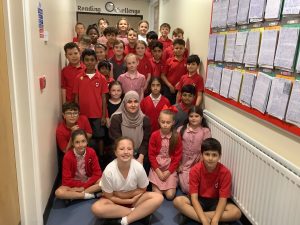
At St Robert Southwell, we celebrate and learn from the diverse faiths and beliefs within our community, fostering respect, understanding, dialogue and inclusion for all.
In line with the Religious Education Directory, pupils in KS1 and KS2 study World Faiths mainly in their final unit of the year ‘Dialogue and Encounter’. In Summer 2, our focus on World Faiths provides opportunities for pupils to learn about and celebrate the diverse beliefs, traditions and cultures within our local and global community.
The RED states:
‘Dialogue and encounter: ‘For “In him we live and move and have our being”’ (Acts 17:28). In this branch, pupils will learn how Christians work together with people of different religious convictions and all people of goodwill towards the common good, respecting the dignity of all humanity. They will also encounter other pathways of belief drawing on the teaching of the Church about intercultural dialogue’.
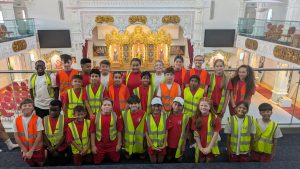
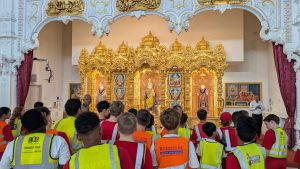
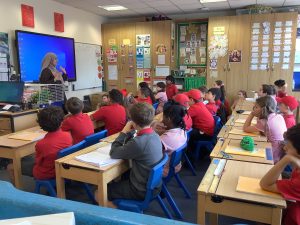
Where possible, we enhance learning through real-life experiences, including welcoming visitors from different faith communities and providing opportunities for pupils to visit places of worship, helping them make meaningful connections between classroom learning and the lived experiences of others.
Below is an overview of what each year group will study in this unit:
EYFS pupils will learn about some of the religious and secular times that are part of British cultural life, for example, the importance of Diwali in some Dharmic traditions or Remembrance Day. These opportunities will happen across the year, not only in the summer term alongside a broad sensory curriculum where children learn about the music, food, smells, tastes, and types of clothing worn to enrich their understanding of different religious and cultural traditions
Pupils learn that the Church is the community of people who belong to Christ, exploring the cross and Sign of the Cross as important symbols of Christian faith. They learn about their local parish and church, encounter Christian music, art and religious objects from other communities, and are introduced to modern Jewish life in Britain, including belief in one God and the importance of the Torah.
Pupils explore the Good Samaritan and learn how Christians work together to serve others and support their local community. They discover links between Jewish beliefs, laws and worship, including the Sabbath and the use of Hebrew, while developing respect for the religious experiences of people in their class and local community.
Pupils explore the connection between the Jewish festival of Passover and the Christian celebration of the Eucharist. They learn about how Passover is celebrated by Jewish communities in Britain today and explore Islamic beliefs, worship and traditions, including belief in one God and the importance of Muhammad, Islamic art and religious music.
Pupils explore the life and mission of St Paul, learning how he shared the Christian faith and encouraged communities to live with love, unity and respect for others. They discover different traditions within the Church, including how prayer and art can reflect the faith of different Christian communities. Pupils also explore ways Christians work together to promote the common good and support others in their local and wider communities.
Pupils learn about the Five Pillars of Islam and explore how Muslims in Britain today live out their beliefs through worship, practices and daily life.
Pupils explore how the Bible was written by different authors inspired by the Holy Spirit, learning about its origins in Hebrew, Aramaic and Greek. They discover the connection between the Old Testament, the Hebrew Scriptures and the shared foundations of Judaism and Christianity through God’s covenant with Abraham.
Pupils explore Jewish beliefs and traditions through the Tanakh and the Shema prayer, learning about Jewish belief in one God and the use of specialist vocabulary to describe this belief. They also enco
Pupils explore the importance of dialogue, learning how Catholics are called to promote unity, love and the common good among all people. They consider how people can work together towards shared goals and develop their understanding of the term ‘worldview’ and how different worldviews shape people’s beliefs and ways of life.
The children also developed their knowledge of Dharmic faith traditions, with a focus on Hinduism, recognising links between Hindu beliefs, practices and ways of life and developing respect and understanding for different religious worldviews.